


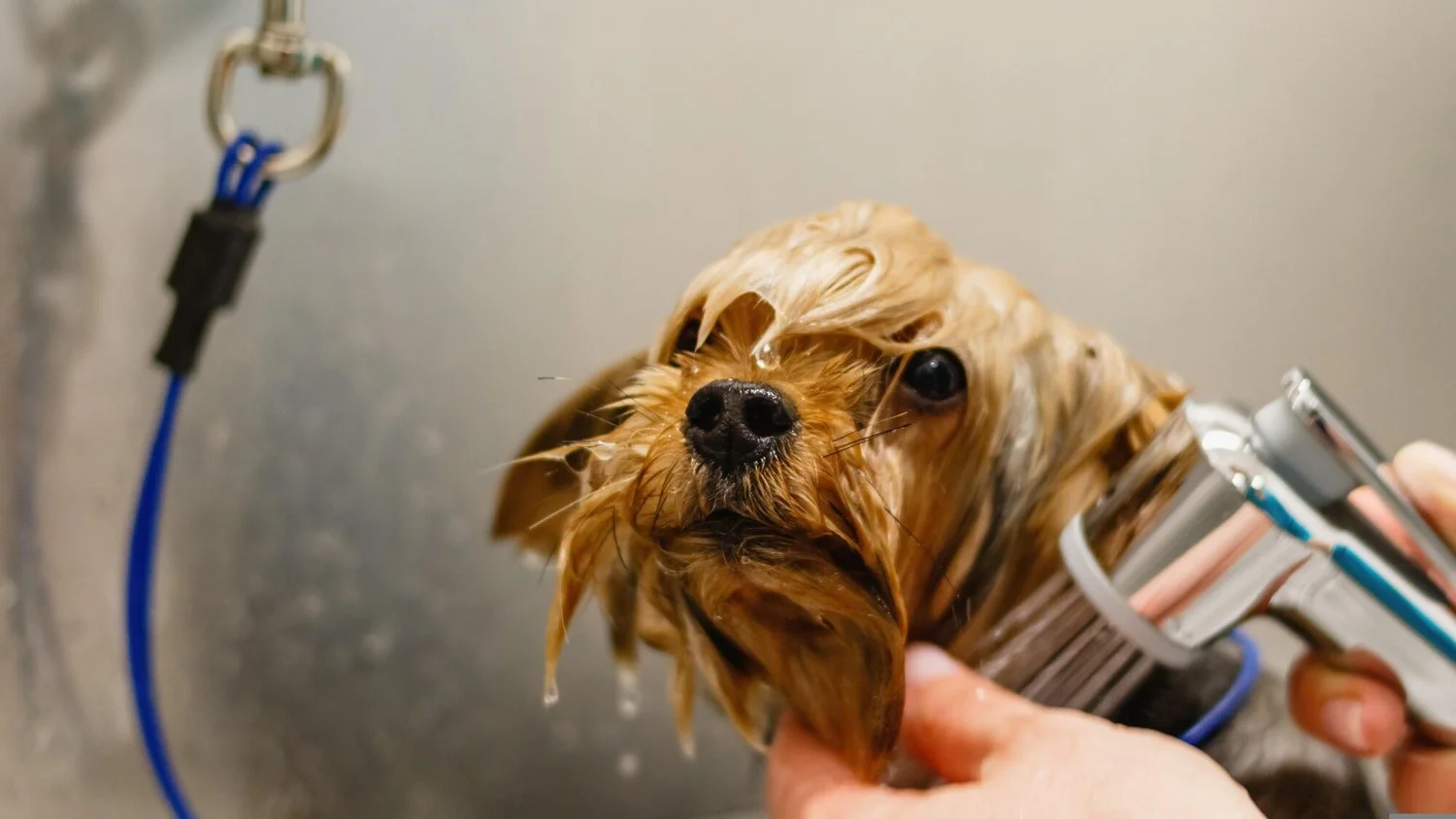
For many dog owners, the phrase “bath time” is met with a very specific reaction: the tail tucks, the ears go back, and your otherwise brave companion suddenly attempts to become invisible under the coffee table.
Bathing your dog is often a chore that ranks right up there with cleaning the gutters. It is wet, messy, and physically exhausting. You often end up just as soaked as the dog, and the bathroom looks like a water park after a hurricane. However, regular bathing is essential for your dog’s health. It removes dirt, debris, and allergens, monitors for parasites like fleas and ticks, and keeps their coat mat-free.
The good news is that it doesn’t have to be a wrestling match. With the right preparation, the correct tools, and a shift in mindset, you can turn this dreaded task into a manageable—and dare we say, enjoyable—bonding experience.
Here are 12 expert tips to ensure a stress-free bath for both you and your four-legged friend.
Phase 1: The Preparation

The battle is often won or lost before a single drop of water touches your dog’s fur. Proper preparation prevents panic.
1. The Pre-Bath Brush Out
This is the most overlooked step in the bathing process. Before you even lead your dog to the tub, you must brush them thoroughly.
Water acts like a tightening agent for mats and tangles. If you wash a dog that has knots in their fur, the water will cinch those knots tighter, making them nearly impossible to remove later without cutting them out. This can also cause skin irritation, as the tightened mat pulls on the skin. Spend 10 to 15 minutes with a slicker brush or a metal comb to remove loose fur and detangle the coat. This also speeds up the drying process significantly.
2. Exhaust the Energy
A tired dog is a calm dog. If your dog has a high energy level, trying to confine them to a bathtub is a recipe for disaster.
Take your dog for a long walk, a run at the park, or an intense game of fetch about 30 minutes before the bath. By burning off that excess energy, your dog will be less inclined to resist and more likely to accept the process. They don’t need to be exhausted to the point of collapse, but taking the “edge” off makes them easier to handle physically.
3. Mis En Place (Gather Your Supplies)
In professional cooking, mis en place means “everything in its place.” You should adopt this philosophy for dog bathing.
Once your dog is wet and potentially anxious, you cannot leave the room to grab a forgotten towel or the shampoo. Doing so gives the dog an opportunity to jump out, creating a massive mess and a safety hazard. Before you start, gather:
- Shampoo and conditioner (formulated for dogs, not humans).
- Three towels (one for the floor, two for the dog).
- A non-slip mat.
- Treats (lots of them).
- A cup or pitcher (if you don’t have a handheld sprayer).
- Cotton balls.
4. Secure the Traction
Put yourself in your dog’s paws. A porcelain or acrylic bathtub is incredibly slippery. When a dog feels their paws sliding out from under them, their “fight or flight” instinct triggers immediately. They feel unsafe and out of control.
Place a rubber non-slip mat inside the tub. If you don’t have one, a thick towel laid flat on the bottom of the tub works perfectly. This gives your dog grip, which boosts their confidence and keeps them significantly calmer.
Phase 2: The Wash
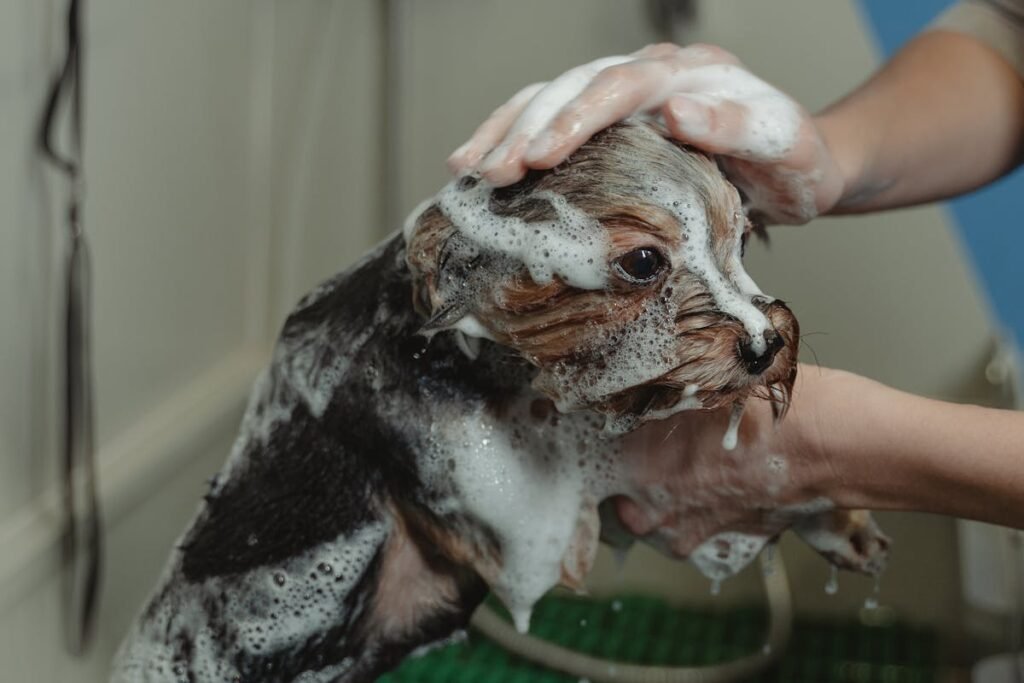
Now that you are prepped, it is time for the water. The goal here is efficiency and comfort.
5. Check the Temperature
Dogs have more sensitive skin than humans. Water that feels “nice and hot” to you might be scalding to them, and water that is too cold can shock their system and make them shivering and miserable.
Aim for lukewarm water. Test it on the inside of your wrist—it should feel warm, but not hot. If it’s summer and you are washing them outside with a hose, be careful; hose water can be freezing, which is uncomfortable, or if the hose has been sitting in the sun, the initial burst of water can be dangerously hot.
6. Protect the Ears and Eyes
Nothing ruins a bath faster for a dog than getting soapy water in their eyes or water deep in their ear canals (which can lead to infections).
- Ears: Gently place a large cotton ball inside each ear (do not push it deep into the canal, just inside the opening) to block water from entering. Crucial: Remember to take them out when you are done!
- Eyes: When washing the head, tilt the dog’s chin upward so gravity pulls the water back over the neck rather than down into the face. Alternatively, use a damp washcloth to wipe the face rather than a sprayer.
7. The Peanut Butter Distraction
This is a pro-tip that has revolutionized home grooming. Smear a tablespoon of peanut butter (ensure it is Xylitol-free) on the wall of the shower or tub at your dog’s eye level. Or, use a suction-cup silicone “lick mat.”
While you are scrubbing and rinsing, your dog is happily distracted licking the treat off the wall. Licking is a self-soothing behavior for dogs, so this not only distracts them but actually releases endorphins that help keep them calm.
8. Dilute Your Shampoo
Most dog owners use way too much shampoo. This makes it difficult to rinse out, and residue left on the skin is a leading cause of post-bath itching (“hot spots”).
Buy a cheap plastic squeeze bottle (like a condiment dispenser). Fill it with a mixture of warm water and dog shampoo. Shake it up to create suds. This allows you to penetrate the coat much easier than a glob of thick gel, and it rinses out twice as fast.
9. The “Head Last” Rule
Dogs have a “shake reflex.” When the sensors in their ears and head get wet, it triggers the involuntary need to shake their entire body to remove the water. To keep yourself dry for as long as possible, wash and rinse the dog from the neck down first. Save the head for the very last step. The moment the head gets wet, the shaking will commence, so you want that to be the final moment before you turn the water off.
Phase 3: The Aftermath
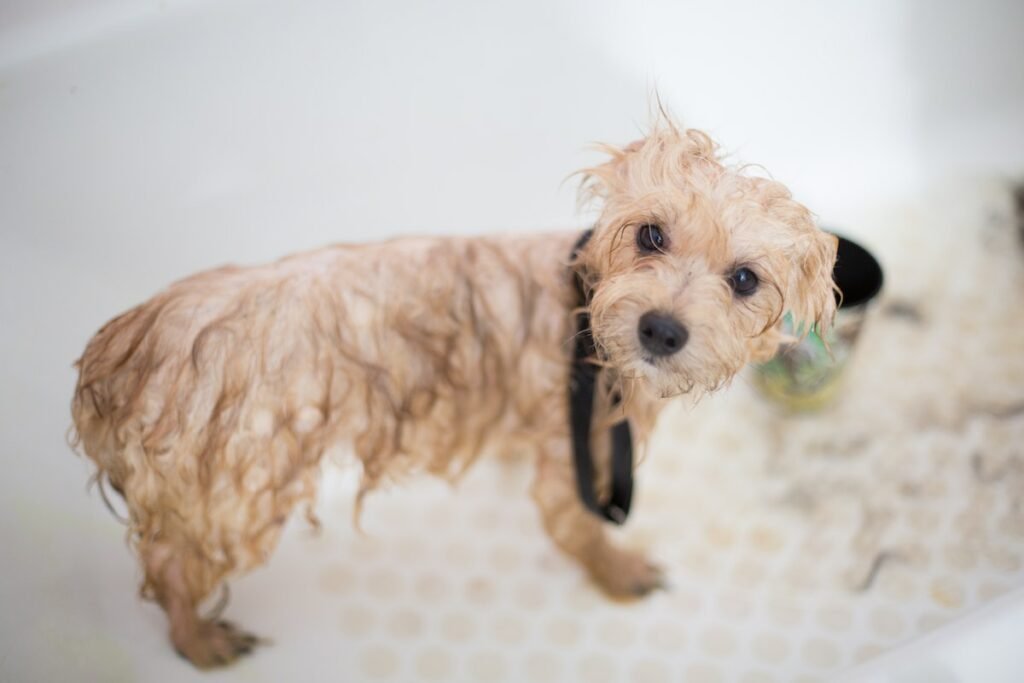
The bath isn’t over when the water stops. The drying process is just as important for the dog’s skin health.
10. Squeeze, Don’t Rub
Your instinct will be to vigorously rub the dog with a towel to get them dry. However, vigorous rubbing can tangle the fur (especially on long-haired breeds) and cause frizz.
Instead, use a highly absorbent microfiber towel and squeeze the water out of the coat. Drape the towel over the dog and press down, absorbing moisture. If you must rub, do so gently in the direction of hair growth.
11. Managing the Zoomies
Post-bath hyperactivity, often called the “zoomies,” is a real phenomenon. Dogs often run around frantically, rubbing themselves on carpets, furniture, and beds. This is an instinctual attempt to get dry and to remove the “clean” scent, returning to their natural smell.
Anticipate this. If you don’t want wet dog smell on your sofa, have a plan to contain them in a safe area with towels on the floor until they have zoomed it out of their system.
12. Heavy Praise and High-Value Rewards
The bath should end on a massive high note. The moment the process is done, offer a “high-value” treat—something better than their usual kibble, like a piece of cheese, boiled chicken, or a special jerky.
Combine this with enthusiastic verbal praise. You are conditioning your dog to understand that the discomfort of the bath leads to a jackpot reward. Over time, this positive association can significantly reduce anxiety.
When to Call the Professionals
While these tips can make home bathing manageable, there are times when it is simply better to let the professionals handle it.
If your dog is extremely fearful or aggressive when cornered in a tub, forcing the issue can damage your relationship or lead to injury. Furthermore, certain breeds with thick undercoats (like Huskies, Malamutes, or German Shepherds) or dogs that require specific haircuts (like Poodles or Doodles) require equipment that most homeowners don’t have, such as high-velocity dryers and professional clippers.
If you are dealing with heavy matting, a skunk encounter, or just don’t have the physical space to wash a large breed, professional grooming is the safest and most effective route.
Let Us Handle the Mess
Does the idea of cleaning the bathroom after washing the dog sound exhausting? Do you want your pooch pampered by professionals who know exactly how to keep them calm and make them look their best?
Call Shaggy’s Dog Wash & Grooming at 701-232-4367.
We take the stress, the mess, and the wet dog smell out of your house, returning your best friend to you clean, fluffy, and happy.